In June of ‘83, I returned to America after serving 4 1/2 years with the Army in Germany. At the time, the Post-Vietnam dislike of soldiers was still alive, a decade after the war. Returning to the States, I had a good experience at the airport that still gives me shivers today.
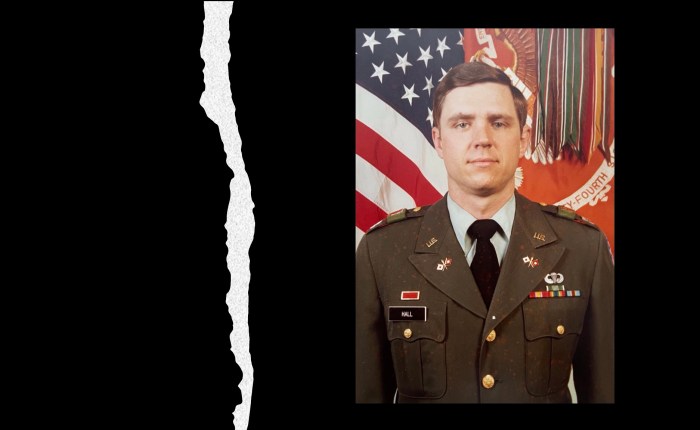
Captain Hall in Early 1983. Commander, HHC, 34th Signal Battalion.
It’s different now and we as a country, or at least most of us, have learned to separate politics from the people serving in uniform. Back then? Post-Vietnam? We weren’t so great about how we treated our soldiers. I remember someone spitting at me as a cadet while walking in New York City in the mid-‘70s. In 1979, right before we first deployed to Germany, a woman from our church commented to my mom about how terrible it was that they as taxpayers had to pay for Cathy to go to Germany with me, and for us to be able to take some of our belongings with us. AND this was a woman from our church I’d know since I was a child.
Of course most family friends, and our close friends were great with us, but past that? Things were often ambiguous. None of this was as bad as soldiers put up with during Vietnam, but it would be years later before we (as a country) really learned to separate politics and our respect for our soldiers.
In June of ‘83, I turned over my Company Command in Stuttgart, Germany. I had a couple of weeks of additional work I needed to do, so Cathy flew back ahead of me. Finally it was time for me to go home and I flew on a commercial flight wearing civies. We landed at Dulles and I made my way to customs where the line seemed about a mile long. Several flights arrived at the same time, and the line wasn’t moving.
As I stood there, I noticed a young lady walking down the line looking at people in the line. Eventually she arrived in front of me and said “Are you in the Armed Forces?” I’m sure my short haircut and bearing probably gave me away.
I answered “Yes ma’am, the Army.” and she said “Follow me.”
I walked with her for quite awhile and we finally arrived at the front of the customs line. One of the stations opened up and she walked me over to it. The guy behind the counter looked at me and asked for my passport, or my military ID and orders, which I produced for him. He took a quick look, handed my papers back to me and then said, “Thank you for your service. Welcome home to the United States of America.”
I still get a shiver typing those words today. It was the first time someone went out of their way to thank me for what I was doing, and then welcomed me home to boot. It was such a little thing, but plainly had a huge impact on me. I remember it clear as a bell forty years later.
I’ve thought about this story lately. Probably since Panama in ‘89, and certainly since the First Gulf War, we’ve thanked our soldiers and shown respect for them. Unfortunately, an annual poll conducted last November by the Reagan Institute shows respect for the military dropping from 70% in 2017 to 48% in 2022. Much of the drop was attributed to people (from both sides) trying to politicize the military, or what the military was doing.
To be quite frank, most people today have no connection with our armed forces. Their sons and daughters aren’t in our military. If fact, over 70% of American youth today aren’t qualified for the military. They are overweight, or are doing illegal drugs, or are doing legal drugs that make them ineligible for military service. I fear that for many, saying thank-you is a cheap and easy way to feel good, while not really caring about our troops. Maybe I have that wrong, but I’m not so sure.
As time progresses, I’m hoping we as a nation can adult enough to remember to mentally separate politics and the soldiers serving in the military. I hope that we can take a couple of minutes to genuinely thank our troops. Not pro forma, but really thank them. We continue to owe them that much.
Addendum:
in a side note, in the 4 1/2 years we were gone on that tour, I only made it back to the States once. That was to attend my sister Tanya’s wedding. When Roberta married the next year, we couldn’t afford another trip home. It was one of the many family events we would miss over the course of our almost 9 years overseas.
Thanks to my wife Cathy for input to parts of this blog. As an Army wife, she too remembers those days. Like me, she is also concerned about the lack of connectivity between our society and our military today.
My friend Bob Bishop, straight out of the US Naval Academy, was interviewed by Admiral Hyman Rickover in 1964 for admission to the Navy’s Nuclear Power Program. Rickover, known as the “Father of the Nuclear Navy”, served in a flag (General Officer) rank for nearly 30 years (1953 to 1982), ending his career as a four-star admiral. His total of 63 years of active duty service make him the longest-serving naval officer, as well as the longest-serving member of the U.S armed forces, in history. In 1954, with the launch of the first nuclear submarine, the USS Nautilus, he appeared on the cover of Time Magazine.
Admiral Rickover on the Cover of Time in 1954
There were those who loved him and those who hated him. He exercised tight control for three decades over the ships, technology, and personnel of the nuclear Navy. He interviewed every single prospective officer considered for service in a nuclear ship in the US Navy until his retirement in 1982 at the age of 82.
According to Wikipedia, “over the course of Rickover’s career, these personal interviews numbered in the tens of thousands; over 14,000 interviews were with recent college-graduates alone.” Many of those interviews are now lost to history. Here is the story of Bob’s interview in his own words.
Bob in 1964 at the Naval Academy.
***********
Much has been written regarding the harshness of his interviews, but none can criticize the results. Certainly none of those who successfully emerged from the crucible would do so.
On Friday, January 21, 1964, I was a First Classman (senior) at the Naval Academy and joined 34 other classmates on a bus to DC to be interviewed for the nuclear power program. At the time, many offices of the Navy were still located in “temporary buildings” built on the Mall during the Second World War – and were still in use twenty years later.
There were lots of tidbits floating around about the interviews with Admiral Rickover, aka “The Kindly Old Gentleman,” (abbreviated KOG), although never called that to his face. One such rumor was that the chair you sat in was rigged so it rocked if you were nervous. Most importantly, you should answer any question quickly and decisively.
Needless to say, I was apprehensive. We (there were also a couple of busloads of Midshipmen from Navy ROTC schools) were herded into a large semi-circular room with simple folding chairs, arranged in rows facing the center of the room. There were four passageways leading out from that central hub like spokes on a wheel. There were a couple of vending machines and we were told a head (bathroom) was just down one of the passageways. We were told not to talk to one another. We were also told to remain in the room until your name was called, and that was all. To be honest, we were afraid to even go to the head, because what happened if your name was called and you weren’t there? So, there we sat. Soon, someone would come down one of the hallways and call out a Midshipman’s name. He (there were no women at the Naval Academy for another 13 years) would rise and go with him, and sometime later come back and sit down. The scuttlebutt was that each person would have three interviews before potentially meeting with the Admiral, although some had four and a few had five. Some of those interviews were short (5-10 minutes) and some were long (an hour plus). Also, you had no idea if the person interviewing you was a chief petty officer, a prospective commanding officer, a member of the Nuclear Reactors division or somebody else – they were all in their 40s-50s and all in civilian clothes.
I had three interviews and what we discussed became a blur – I was so focused on answering the questions, I really couldn’t remember the questions even immediately after they were asked. I was thinking on how I did, was I sitting up straight enough, remembering to be decisive, etc. The one question I remember most clearly was being asked about the window air-conditioning unit. I started into a description of the freon cycle when I was stopped. The questioner wanted to know why it didn’t fall out of the window. I started postulating about ways it could have been installed so it wouldn’t fall either in or out. I also remember being asked the value of studying naval history (pro and con), why I decided to go to the Naval Academy, what was Bernoulli’s equation, and why did I want to go into nuclear submarines.
Each time I went back into the central room, there were more and more empty seats. With no one to ask, I merely presumed they had finished the process. I worried and wondered if it was good news or bad that I was still there. As I sat there, morning became afternoon and afternoon night. Eventually, there were maybe three or four of us left. It was 8 something PM, and my name was called. I was led down a narrow corridor, lit only by bare light bulbs hanging down periodically the length of the corridor and into the distance. Light showed in the hallway from only one office, at the end of the corridor on the right. As we approached, my escort told me the Admiral’s yeoman (Navy admin) was gone and I should just walk past her desk and into the Admiral’s office and sit down in the empty seat.
I did and sat down in the Navy issue aluminum square channel chair, with a naugahyde seat. The room was a little dark. The scuttlebutt was right – the two front legs were shorter than the back legs, and one of the front legs was shorter than the other so that, if you were the least bit nervous, you would slide off the seat or rock sideways. I sat with my butt firmly implanted up to the back of the chair, giving thanks to the many hours I spent plebe year on “The Green Bench” (envision sitting in a chair against a wall, with your knees/lower legs at a 90° angle and your thighs/lower back also at a 90° angle – now take the chair away).
His office was a mess. It was about 10’ wide and 15’ deep. There was a bookcase behind me, another on the wall to my left, bookcases down each wall, and a big old wooden desk directly ahead. Each of the horizontal surfaces, including his desk, were piled high with a hodgepodge of varying heights of stacks of books, interspersed with folders. The door I came in was on my right, behind me. I was focused straight ahead (the Navy term was “keeping your eyes in the boat”), but my peripheral vision, and attention, was focused to my right so I could immediately rise as soon as he came in.
Three or four minutes passed when all of a sudden, I heard a loud voice say, “Why the f**k have you been wasting all your goddam time?” I immediately focused straight ahead and there he was, and had been the whole time, obviously just watching me. I never met an Admiral before and certainly never expected one to curse. Notwithstanding the advice to respond quickly and cogently, what do you suppose came out of my mouth? “Umm, er. . .” “What?!” he said. “I have been working hard, sir.” “Don’t give me that shit,” he replied. Our “discussion” did not go much better, although I don’t remember much of it, just the feeling it was going a lot less than well.
Things I remember vividly – At one point, I said something along the lines of “I think there is more to education than just book-learning.” Big mistake. Unfortunately, not the last. Our discussion circled back around to my grades (I thought afterwards he must have those in a folder on his desk). He asked what my class standing was going to be when I graduated. I knew I was doing pretty well but I had no idea what the current number was, so I said “55.” He replied, loudly, “WHAT?” I said “50?” a little plaintively. He said, “DO YOU MEAN . . . ?“ I quickly interrupted and said “45?” He roared “GET THE F**K OUT OF MY OFFICE!”, which I rapidly did.
Admiral Rickover – the “KOG“
What felt like a three-hour-long crucible under intense heat, actually lasted around twenty-two minutes. It took me a couple of hours, and a couple of scotches, to get my resting heart rate down. I also started thinking of what I wanted to do in the Navy, other than nuclear submarines, when I graduated. Plainly, I wasn’t going to be selected.
A couple of months later, a list was posted at each of the twenty-four company offices at the Academy. The word quickly spread so each of us Firsties (seniors) who had applied hurried down the corridor. If your name was on the list, you were in. I read the list, haltingly, three times to make sure that was really my name.
Postscript – I had three other interactions with the KOG during my six-plus year career in nuclear submarines. Not bad for a mere lieutenant, but those are stories for another time.
Bob Enjoying Life Last Week
Addendum:
if you have the time, it’s worth reading up on Admiral Rickover’s career. It was pretty amazing, although he actually only commanded one ship. Some of his detractors compared his hold on the Navy, and particularly the Nuclear Navy, to Hoover’s hold on the FBI for all of those decades. He was a brilliant man, and there’s no doubt our Nuclear Navy would not be where it is without him.
Bob is a wonderful storyteller. Here are two other blogs from his time in the Navy on a Nuclear Submarine:
The movie, “The Hunt for Red October” is child’s play, compared to what these submariners did on a daily basis … “The Comms Officer ran in and handed the CO the decoded message. The CO read the message, took the lanyard from his neck, unlocked the firing key cabinet, and reached in for the firing key. We were about to” […] Continue at: https://mnhallblog.wordpress.com/2021/06/23/we-knew-we-were-at-war/
Crazy Ivan anyone? … In 1970, our sub, the USS Finback, was helping with Anti-Submarine Warfare training for NATO aircraft. An observer on the sub said “I think I understand your plan. You alternate going to port or starboard as soon as you submerge.” I responded, “Well, not actually”, and we walked over to […]. Continue at: https://mnhallblog.wordpress.com/2022/04/13/submarine-games
We have lived in our current home for 24 years. When we started looking here in Fauquier County, since I was the one who would be doing the long commute, I told Cathy the only way I would move out this far is if we found the house we were going to die in. Cath, of course, took on the challenge.
In last week’s blog I spoke about a 750+ unit housing development happening about 15 minutes from us in nearby Culpeper County. (A link to the blog is in the Addendum). It consists of cookie-cutter homes starting north of $500K, with some as high as $800K+. All are on small lots. I’m sure they are someone’s dream home, but not mine.
It did get me to thinking about our journey to Fauquier back in 1999 and our own dream home.
When Cathy and I returned from Germany in 1989, a couple things happened: first, We bought a townhome in Fairfax, Va; second, I started working a classified job with the military; and third, Cath got a job in Crystal City, AND bought a horse she was to own for the next 15 years – Arthur. After I decided to get out of the Army in ‘92, we stayed in Fairfax. I started a great job with a company called SRA and had about a 30 minute commute to work.
Our townhouse was nice, but by ‘98 we’d decided to look for a house. More specifically, a property with enough room to keep a couple of horses on it, which meant at least five acres of land. By then Cathy had her own business and was working from home, while I was still working for SRA. We looked in Fairfax County and found a few properties we liked in the Clifton and Fairfax Station areas and even put an offer on one, narrowly losing out to another couple. It was frustrating to lose out on the house, but we were also frustrated as there weren’t many properties for sale in the area that met our requirements and were in our price range.
That’s when Cathy suggested moving out farther to Fauquier County, a beautiful area. We’d spent time there over the years for various horseshows, weekend trips to B&Bs, going to a few Sunday brunches and of course visiting a couple of our favorite wineries. We loved Fauquier.
I immediately said no. Not only no, but hell no. It was not open to discussion. There was no way I was going to do that commute on a daily basis. At the time I was working in Arlington and the commute would take an hour and fifteen or twenty minutes each way.
We circled around that “discussion” for quite some time and a few weeks probably passed. I then made a mistake.
We were discussing Fauquier again, and in a weak moment I said, “I tell you what. If we find the house we are going to die in, I’ll move there.” Cathy nodded and said OK.
In the coming week or two, Cath found three country places online to look at, and with our agent, we scheduled visits to all three on the same day in February of 1999. It snowed an inch or two the evening before our visit but was sunny as we drove to view the properties.
The first place didn’t really look as it did in the photos and we spent no time there. The second place was nice, new and had a barn to die for. Some of the rooms in the home were a bit odd, but overall, we liked it. We weren’t blown away by it but might give it further consideration. We left, and then proceeded to house number three, also the farthest away.
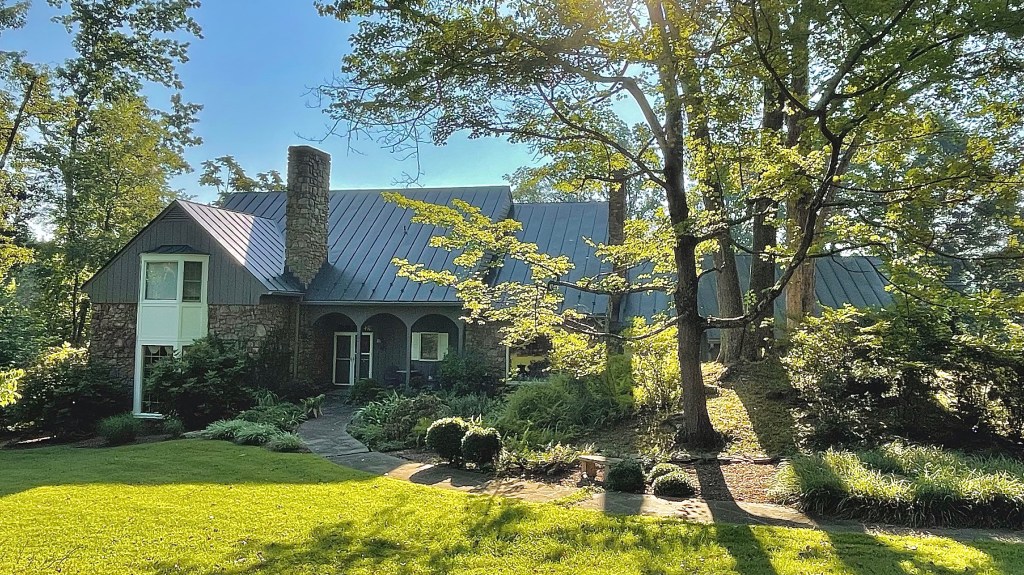
We drove down the long driveway with snow in the field to the left and the woods to the right. It was a nice setting. You couldn’t yet see the house and then we crested a small hill for our first view. It had stone and cedar siding with two chimneys and a cedar shingled roof. How pretty in the snow! We parked outside the garage and walked to the stone porch in the back of the house. As we stood there looking at the pond and fields, three horses trotted by in the paddock between the house and the pond. I mean it was so perfect, it was almost as if they were holding the horses out of sight, and as we arrived, someone called and said, “Cue the horses.”
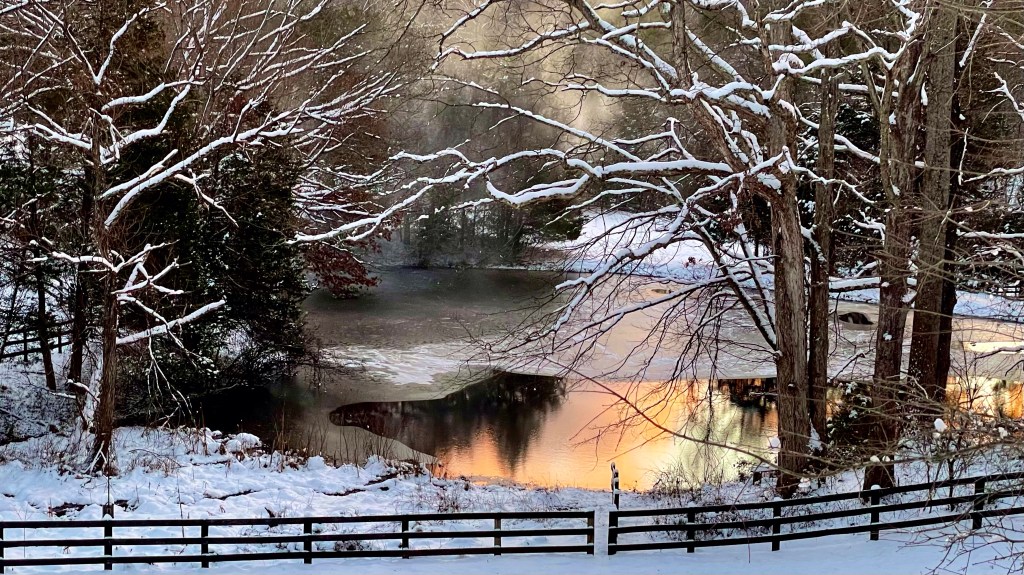
The Pond, on Another Winter Morning
Cathy and I didn’t say a word but looked at each other. It was one of those looks married couples have where an entire conversation takes place and no one says a word. We hadn’t entered the house yet, but pretty much knew this was our next home.
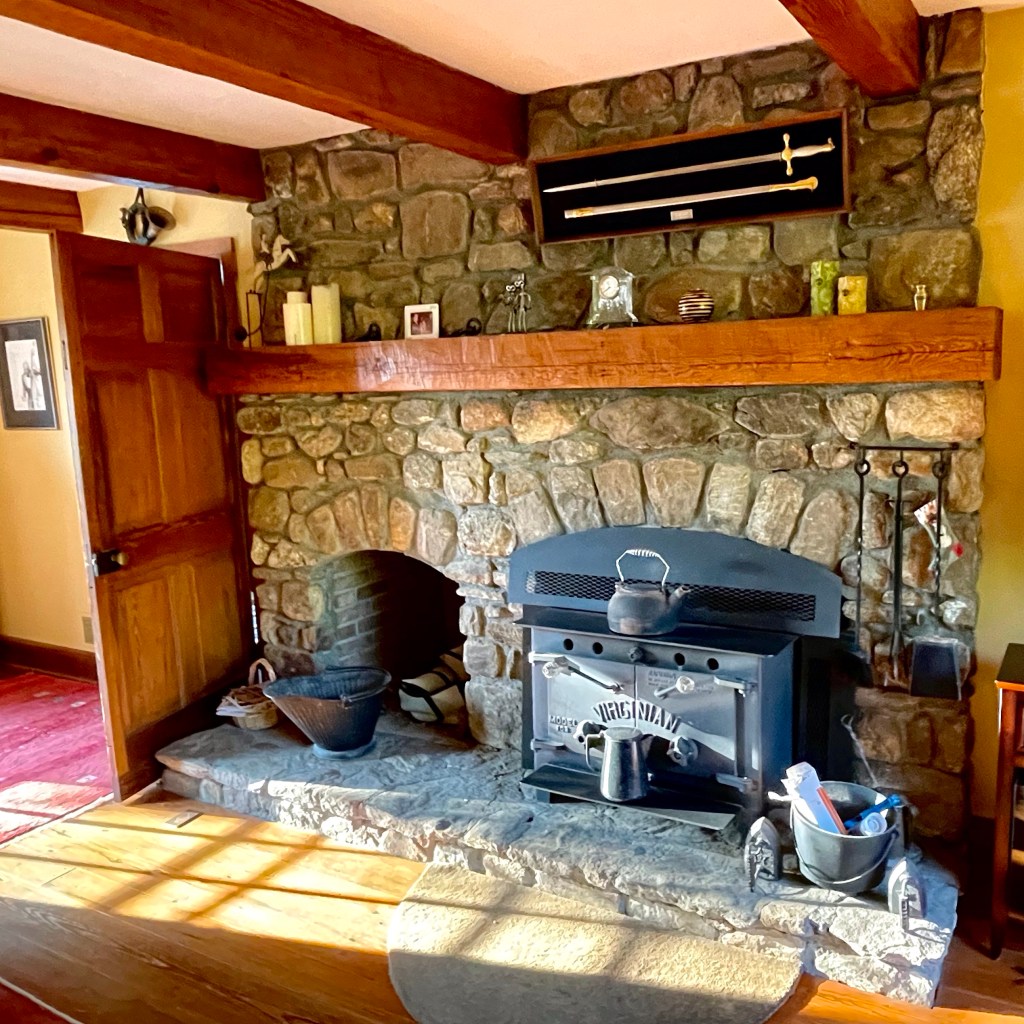
This house wasn’t new. It was about 20 years old, but built in a way to make it look much older. In the family room there was flooring and beams from a pre-Civil War warehouse near Petersburg, Virginia. One of the doors was antique and made entirely by hand with no nails involved. Most of one side of the home was glass or glass doors so there were constant views of the pond and fields. The fireplace in the family room was made with stone from the property and installed by an old stone mason who lived just up the road (and is now deceased).
The Morning Sun Streaming in on the Family Room’s Stone Fireplace.
There were things that needed updating of course. Some of the colors were straight out of the 70s. The peacock wallpaper in the dining room would have to go. Most of the carpet was old – probably from the late ‘70s as well.
We also did a tour of the barn. It was functional, although nothing special. The barn at house number two kind of blew it away, but this one was perfectly functional with 6 stalls, instead of the 4 at the previous place.
We left and drove back home with our agent. The distance didn’t seem quite so far to me now.
A few days later we called the owner directly and asked if she would give us a tour of the property itself, which she was more than happy to do. We spent a few hours walking the twenty acres and helped her feed her horses that night. As we passed by the pond, she said “I’ll even throw in the rowboat, if you decide to buy.” When our agents (both ours and hers) found out we’d met without them, they were, ummm, a bit upset, but there wasn’t anything they could do about it.
The next day we put our offer in, and after some back and forth, we signed the contract. We couldn’t actually close until the end of May, as the owner had a couple of pregnant mares and didn’t want to move them until the foals were born and old enough to travel. It made perfect sense to us.
We closed on the appointed day in May and a few days later, with our pickup truck, horse trailer and a U-Haul truck, our friends helped us move. The house was christened with a party that afternoon and evening, and on its way to becoming a home. We named it Rohan Farm*.
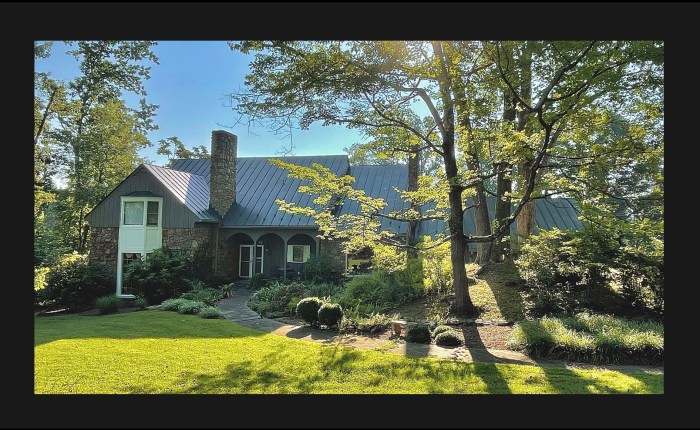
Our Home, Rohan Farm
Although the house was already nice, we spent a decade getting everything just the way we wanted it – repainting and recarpeting; the ‘70s look went, as did the outdated kitchen; ultimately, a wine room was added. There was lots of work outside as well – redoing things in the barn; clearing brush off of fencing and replacing the fencing; adding an outdoor riding ring; adding new paddocks; putting in automatic waterers; adding multiple gardens; and of course an endless list of smaller items.
In June it will be 25 years here. We love this place. It doesn’t have all the bells and whistles, but it’s warm and comfortable. It looks like it belongs here in Virginia and has been here forever. We love it and hope to remain here forever as well.
Addendum:
* Rohan Farm – Yes, this is from Lord of the Rings. Rohan was the land of the horse people, so it seemed to fit. We’ve both been big fans since the ‘70s, well before the movies ever came out.
You can find a link to last week’s blog on the housing development here – The new housing development sits in the middle of nowhere, 6 miles west of Warrenton and 12 miles north of Culpeper. Some thought it might provide “affordable housing” for the area, but with homes starting “in the low $500s”, I don’t think so. Or maybe my definition of affordable housing is […] Continue here: https://mnhallblog.wordpress.com/2023/08/08/paving-paradise/
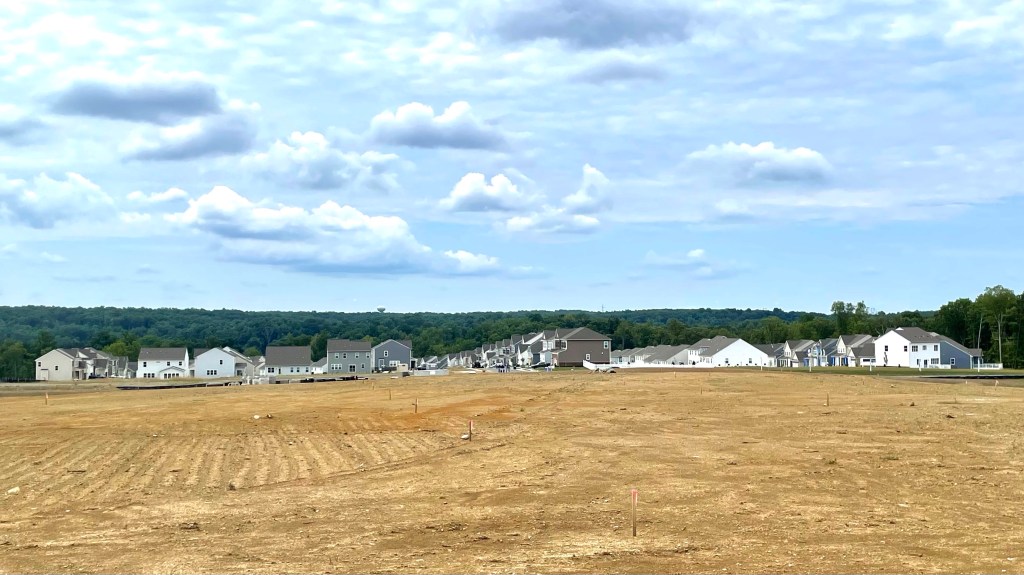
The new housing development, Stonehaven, sits in the middle of nowhere, 6 miles west of Warrenton and 12 miles north of Culpeper. Some thought it might provide “affordable housing” for the area, but with homes starting “in the low $500s”, I don’t think so. Or maybe my definition of affordable housing is a bit different from others.
Stonehaven is 60 miles west of Washington DC, and about 25 miles east of Skyline Drive and the Appalachian Trail. The development, which could eventually include over 750 homes, is in Culpeper County, about a mile from the border of Fauquier County and a couple miles from Rappahannock County. Both Fauquier and Rappahannock have strict zoning requirements in place and a housing development of this magnitude couldn’t just pop up in the middle of nowhere. Culpeper County like Loudoun and Prince William, is a bit different and pretty much open for business.
Stonehaven – Ultimately, Over 750 Houses.
The land was wooded and the Rappahannock River crosses to the east of the property. Longstreet and Jackson would have passed nearby on their way to the Battle of Second Manassas in 1862.
There is an older development just a bit down Rixeyville Road. While there is a golf course nearby, a gas station across the highway and a brewery about 4 miles away, there are no other businesses in the area. There are no immediate plans for a grocery store, or to my knowledge, even a 7-11 in the near future, although the “master plan” has retail shops, office space and a grocery store coming “soon”. In the meantime, If the residents want to grocery shop, shop in general, go out to dinner or have a couple of drinks at a bar, they need to make the drive to Warrenton or Culpeper.
Due to the restrictions on growth in Fauquier, housing is tight in the area and there are ongoing discussions about the need for affordable housing – for teachers, police officers and others. When this property development was first announced, there was, on one side angst about the growth, and on the other, the hope for at least some affordable housing.
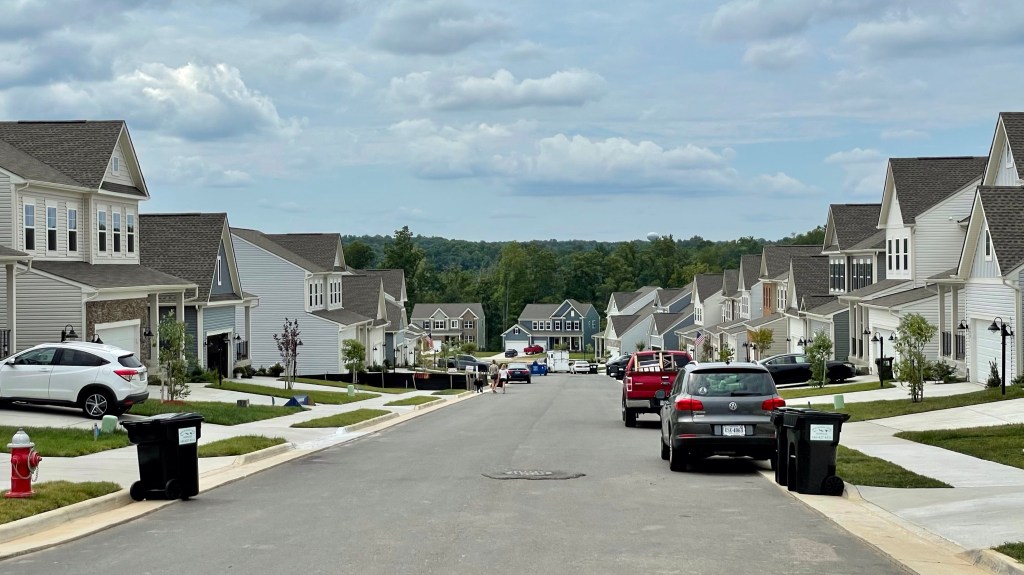
Unfortunately, the concern about growth was real, while the hope for affordable housing proved false. We ended up with a worst of both worlds scenario. They paved paradise, put in a housing development and are adding hundreds of cars to our local roads. And, PS, they did nothing to improve affordable housing. While the houses are starting in the “low $500s”, when I looked online, one of the homes is listed at over $800K.
You Too Could Own One of these Homes for Half a Million Dollars
Yep, they are building hundreds of cookie-cutter houses and people are already moving in. I guess someone said “Build it, and they will come.” Still, it’s all a little sad.
I suppose there’s mild hope. They just put up a new sign announcing townhomes starting from the low $400s. Is it affordable yet?
From the Low $400s. Affordable Yet?
Addendum:
Stonehaven is about a 15 minute drive on back roads from our home in Fauquier County.
Where is your Zen Zone? That is, what do you do, or what place do you go to that helps you relax, find peace and become accepting of what “is” in your life? Where do you go to bring balance to your life? I’m lucky, in that I have a place that works for me in today’s crazy world.
When I talk about a Zen Zone, I don’t really mean the full-on Buddhist Zen practice with meditation, aiming at enlightenment. I’m talking about finding a place of peace, contentment and balance in my life. A place that brings back some sanity to this mad world we live in these days.
How Do You Find a Place of Peace, Contentment and Balance?
If you go to the web and look up Zen, or Zen Zone, you find a number of descriptions, some of them not very Zen like. Many look distinctly as if they are coming from someone trying to make a buck, which isn’t particularly Zen. I did however, find a couple of definitions/comments that spoke to what I’m talking about:
Put simply, Zen is an orientation toward life that generates a sense of peace, equanimity, acceptance, and contentment. To be Zen is to be committed to maintaining clarity and remaining grounded in the present moment, no matter how challenging it is to do so.
“A space designed to be peaceful and calming. No matter what is happening outside this area, it allows me to have a small, predictable place in the world that was created specifically to comfort me.”
Making your way in the world today takes everything you’ve got. Taking a break from all your worries, sure would help a lot. Wouldn’t you like to get away? (OK, kidding on this one – these are the opening lines of the old TV show Cheers, but doesn’t it sound sort of Zen like? 😉 … )
Over the years, I’ve done meditation off and on. When I was working full time, I often took a short ten-minute break in the middle of the day to meditate and re-center myself. I think it helped some, and certainly provided some grounding and calming. I wouldn’t say it was anything to do with Zen, or a Zen Zone, just taking a few minutes to find some peace and balance.
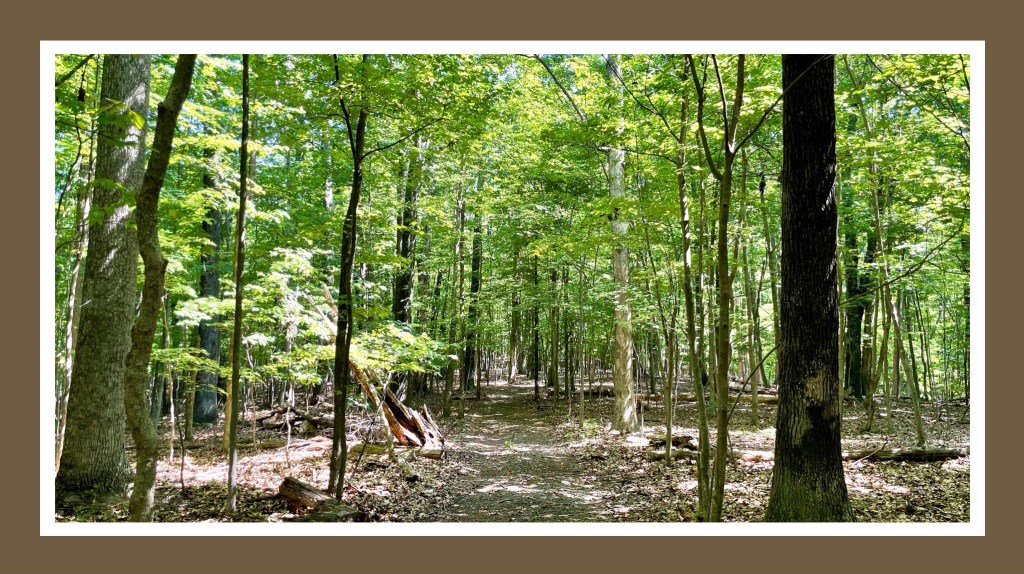
And now? Where’s my Zen Zone? Where do I relax, find peace and “meditate”? It’s an easy answer for me – on my daily walks in the woods. With my knee issues, I don’t run anymore, but I love to walk. Most afternoons you can find me, along with our dog Carmen, in the nearby woods on a three or four mile escape. Sometimes I remain attentive to nature and my surroundings, but other times, the “Zen times”, I lose track of where I am and what I’m doing. Suddenly, I come out of it a quarter mile from home. Hello!? Where am I? Oh yea, I remember now. Be thou at peace.
It’s a wonderful trick when it happens, although it doesn’t happen all of the time. And when it doesn’t happen, it’s still time well spent – a wonderful hike and enjoying what nature has to offer: the trees, animals, plants and views; wildflowers and ferns; a small stream or two; and of course, watching Carmen enjoy the walk as much as I do.
A Walk in the Woods Works for Me.
In either case, I always feel better after my walk. My mind is clearer and less stressed. Maybe I’ve solved a problem or two, or at least gained some perspective. Running and then later, walking, have always worked as exercise for me – burning off calories and trying to stay in reasonable shape. But the mental benefits aren’t to be undersold. As I become older, I am much more appreciative of those mental aspects.
What about you? Have you found such a zone? Perhaps running or walking? Working in the garden? Maybe hunting or fishing? Quilting? Yoga? Doing active meditation? What works for you? Where do you lose yourself and gain some balance in your life?
Making our way in the world today DOES take everything we’ve got. Politics, online garbage, traffic, aggressive people, health concerns, and other personal issues all raise our stress levels. Finding a Zen Zone can help make a difference, even if only for a few minutes each day. Taking a break from all our worries and reclaiming some balance and peace in our lives – I can live with that. Maybe the Cheers theme song was on to something after all.
“If you are depressed, you are living in the past. If you are anxious, you are living in the future. And, if you are at peace, you are living in the present.” ~ Lao Tzu
Addendum:
Zen is a school of Buddhism which emphasizes the practice of meditation as the key ingredient to awakening one’s inner nature, compassion and wisdom. The practice of meditation, as a means of attaining enlightenment










 Live Life Exuberantly