Soft Shell Crabs

Soft Shell Crabs

We invited our neighbor Bill over for dinner last night. We were looking forward to catching up, and hearing about his recent travels. The menu? Soft shell crabs and sweet corn. It’s summer and we are on the Eastern Shore of Mary’s Land. What could be more perfect for July?

The recipe is from our neighbor on Tilghman, Captain Stanley, who was a skipjack captain. If a skipjack captain gives you a seafood recipe, you damned well better pay attention and write it down. Captain Stanley is in his 80s. He’s spent the better part of his life as a waterman on the Bay, crabbing, and oystering. The recipe is totally minimalist, but that makes perfect sense. As Captain Stanley says, “why add anything else and take away from the flavor?” He worked on the Bay for over 60 years and knows a thing or two about crabs. I’m going to listen.
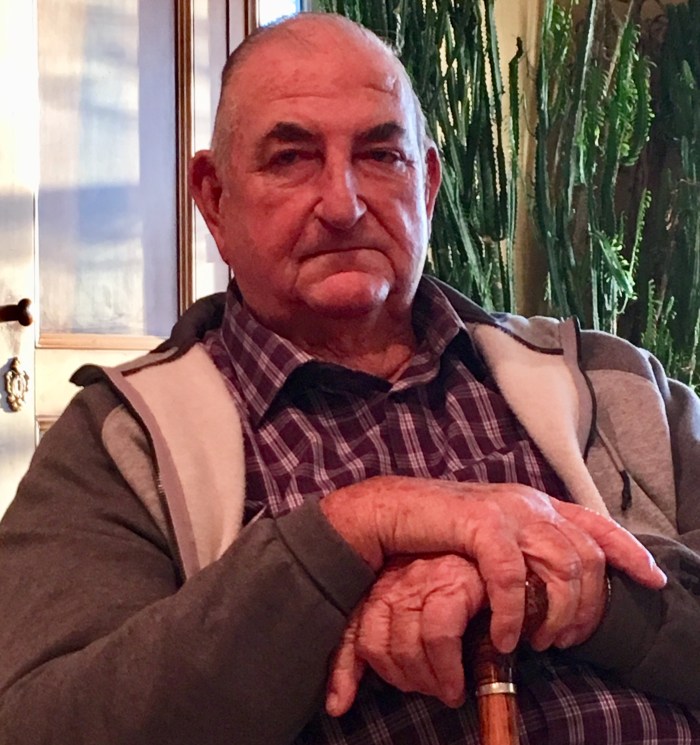
Captain Stanley Larrimore

Cathy added to the meal by sautéing the sweet corn in butter and olive oil with some onion and jalapeño. The final dish? A spread of arugula topped with the sweet corn sauté. Put the soft shells on the top of the corn, with a bit of tarter sauce on the side. We served them with a Pinot, but beer would also go with the dish pretty well.
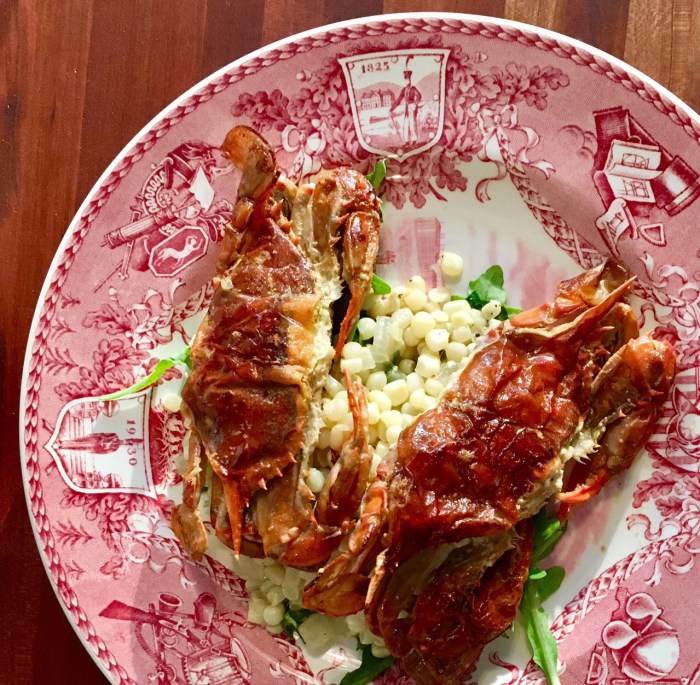
Soft shells sitting on a bed of sweet corn and arugula

Captain Stanley’s Soft Shell Crabs:

Cleaning the soft shells:

1. Cut off face

2. Take off apron (male or female) (and any inner extension that comes with it).

3. Turn over. Lift top edge and scrape out the “dead men” on each side (the lungs). Put edge back down

4. If female, flip back over. Make slits on the two sides of the crab and take out the two white, dime sized objects (the ovaries). Some people (including me) leave the ovaries in.

To cook:

1. After cleaning, salt and pepper them.

2. Sauté in butter (use ghee or clarified butter if you can; if not, combination of oil and butter) about 3, 3 1/2 min per side.

3. Pull off and eat.

4. Have a little tartar sauce if you want.
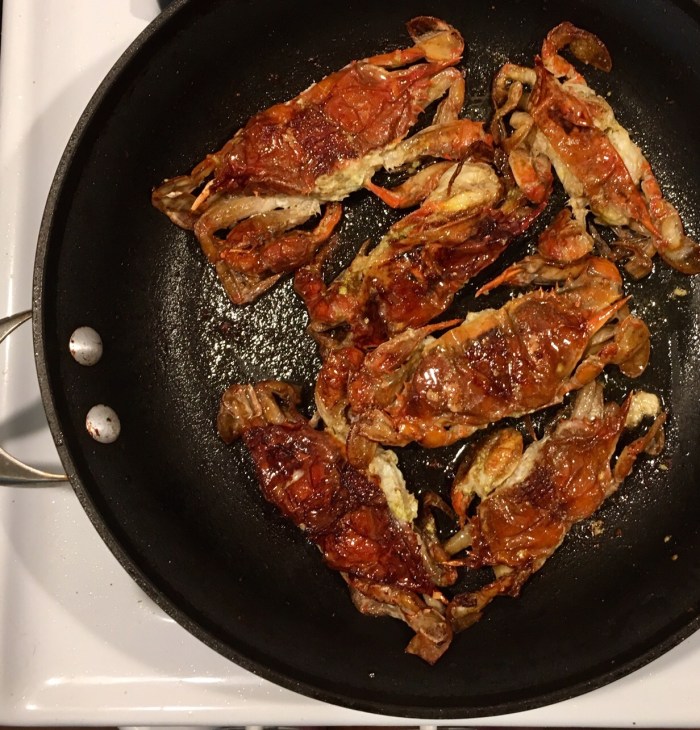
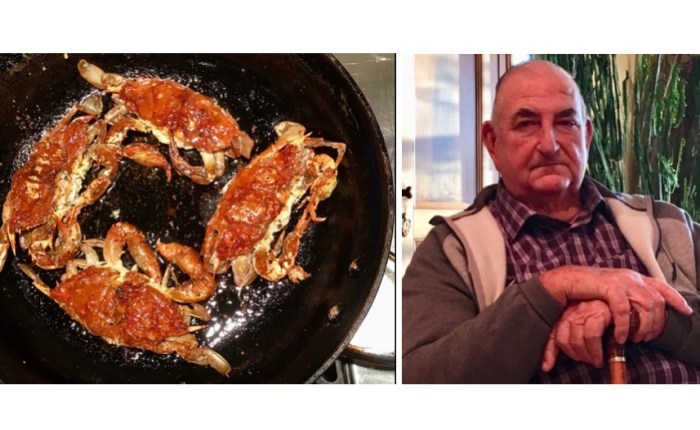
Sautéing soft shells

Addendum:

I borrowed the phrase “Mary’s Land” from Mary Chapin Carpenter, who wrote a song about Maryland with that same title. It’s a great tribute to the state of Maryland.

If you want to learn more about Captain Stanley, or watermen in general, I highly recommend the Book Skipjack by Christopher White. It’s a wonderful book about a lifestyle that is slowly dying away here on the Eastern Shore of Maryland.
Landing on the Moon

There are certain events that occur and even years later, we remember where we were when they happened. Kennedy’s assassination. The Challenger Disaster. 9/11. They are often catastrophic events, but not always. When man first landed on the moon 50 years ago, on July 20th, 1969, I know exactly where I was – The Boy Scout National Jamboree in Idaho.

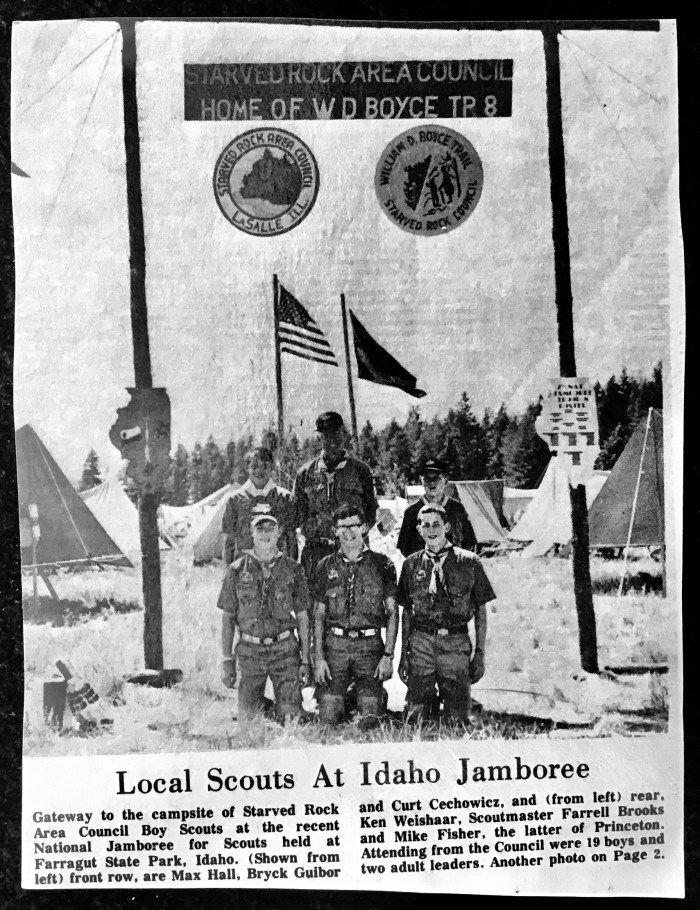
The National Jamboree was held at Farragut State Park, Idaho, from July 16 to 22, and had over 34,000 attendees. I was lucky to be one of them, as my folks had originally said no to attending. Then Farrell Brooks, our Scoutmaster, had a private conversation with mom and dad, and they changed their minds – I could go, but had to pay for some of the trip myself.

On July 12th, we boarded a special train in Chicago for the trip west. The train was for Scouts only, and there were approximately 600 of us on it (it must have been a zoo….;-)….). The trip took a couple of days and included a one day stopover at Glacier National Park.

Arriving at Farragut State Part we built our camp. We put up our tents, lashed together an entrance and perimeter fence, built fire pits, and nailed together our picnic tables and cooking stations.

At the Jamboree, in front of our Troops’ Campsite

In addition to all of the activities going on at the Jamboree, I distinctly remember excitement building about the upcoming moon landing. Both Neil Armstrong and Buzz Aldrin, the two men who would walk on the moon, were former Boy Scouts and Armstrong had obtained Eagle, Scouting’s highest rank.

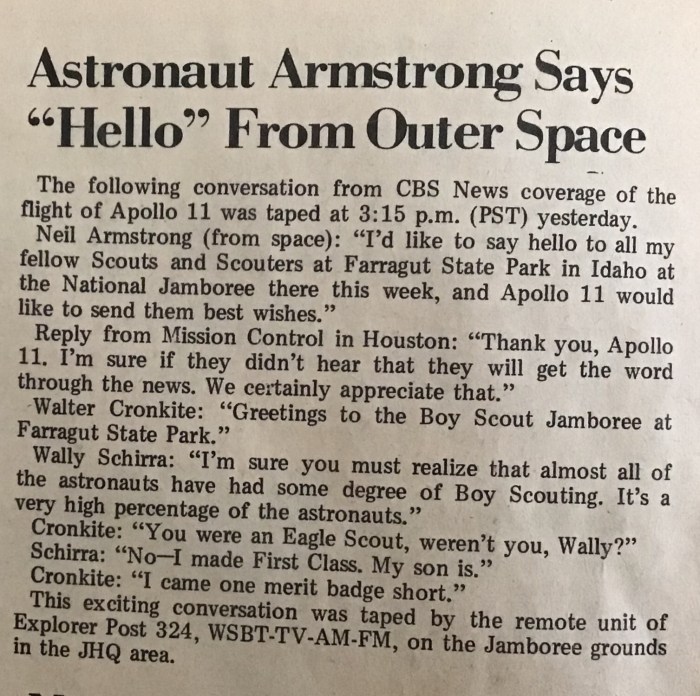
On July 18, while flying toward the moon, Armstrong greeted us Scouts via Radio: “I’d like to say hello to all my fellow Scouts and Scouters at Farragut State Park in Idaho having a National Jamboree there this week and Apollo’s 11 would like to send them best wishes.” We couldn’t believe it when we heard about the broadcast. Here he was, going to the moon, and he took time to reach out to us. The transcript of the broadcast made our Jamboree newspaper the next day.

From the July 19th Jamboree Newspaper

Then came the big day, July 20th. We knew the landing was in the afternoon, however, weren’t exactly sure when. Of course we didn’t have any TV to follow Walter Cronkite and the coverage of the landing, but one of the older scouts had a radio. After lunch, several us stayed in camp and sat at the picnic table listening to the radio. We followed the conversations between Aldrin and Armstrong as they neared the moon, and Mission Control back on earth. I think with no visual for us, it was perhaps even scarier. At 2:17PM local time, Armstrong announced Houston, Tranquility Base here, the Eagle has landed.”

Six hours later, Armstrong and Aldrin both walked on the moon. Without TVs, we didn’t see any of the live footage shown on network television. However, on the following evening, July 21st, all of us Scouts marched to the amphitheater used for the opening and closing events during the Jamboree. That evening they had erected huge white screens. Tapes of the lunar landing, along with the footage of Armstrong and Aldrin walking on the moon were projected on the screens. There were 34,000 of us there, but I bet you could hear a pin drop as we watched history unfolding.

The Jamboree ended the next day and the following day we returned by train to Illinois. I don’t remember anything of the trip home. Three weeks later, Woodstock happened, and a few weeks after that, I started my freshman year in high school.

Over the years, I’ve forgotten most of what happened at the Jamboree, except for a few scattered memories. Sitting at the picnic table, listening to the landing on the moon? It’s clear as a bell in my mind.

Addendum:

1. Later in life, in addition to the Boy Scouts, I had another connection with Apollo 11. Both Buzz Aldrin and Michael Collins were West Point graduates. Aldrin graduated in ‘51 and Collins in ‘52. Neil Armstrong was a civilian. One of the reasons Armstrong was the first to set foot on the moon (in addition to acting as the Commander), was NASA wanted to make sure the first person to set foot on the moon was a Civilian and not a member of the Armed Forces.

2. Mom saved almost everything from when I was a kid, and then returned things to me over the years. I still have my Jamboree patches, coffee mug, special badges and the daily newspapers they gave us while there. I also still have the Look Magazine Special Edition issued the week after the moon landing.

Farrell and Don

50 years ago in June of 1969, I was awarded the Boy Scout’s highest rank, Eagle Scout. I was thinking about this recently when Cath and I were attending the Eagle Court of Honor for Mark, the son of good friends of ours. At the presentation, I thought about Scouting, both now, and when I was a boy. I also thought about two important mentors from my youth.

On one level, time hasn’t been kind to the Boy Scouts. They were recently again in the news for cases of possible sexual child abuse. A couple of years ago, after probably taking too long to decide, they opened Scouting to gay youth and leaders, and a year later, transgender youth. Recently, they allowed girls to join. All of these activities have raised passions both supporting and disparaging the Boy Scouts and I sometimes wonder if scouting will survive. I for one, hope it does.

The Boy Scouts of my youth with Troop 45 were great fun, and taught me skills I continue to use. The camping trips, hikes and summer camps provided memories my friends and I still talk and laugh about. We learned about camping, cooking, knots, nature, first aid, and lifesaving among other “hard” skills. Perhaps more importantly, the Scout Oath and Scout Law taught us (or reinforced in us) softer skills. Learning about doing your duty, helping others, and respecting yourself are not bad things to absorb at a young age. Gaining those hard skills and internalizing the softer skills led to my Eagle award in 1969, at the age of 14.

Eagle ceremony in June of 1969

One of the greatest gifts Scouting gave me was two of my first mentors, Farrell Brooks and Don Willy. They were our Scoutmaster and Assistant Scoutmaster. There were other adults involved in our troop, although looking back, it’s easy to see that many were involved either to watch out for their own son, or to fulfill some leadership longing in their personal life. The kind of adult who liked to be in charge of a bunch of kids. We never paid much attention to those guys. As a matter of fact, we tried to figure out ways of outsmarting them, or doing things behind their backs.

Farrell and Don were different. They practiced what today I would call “quiet leadership”. They let us boys run things as much as possible, with the occasional course correction. They set good examples of how to act as a man and we noticed. They didn’t berate us, chastise us, belittle us, or make us feel like kids. Instead, they encouraged, challenged, and listened to us.

In my youth, I don’t think I knew what a mentor was, but I know I respected Farrell and Don and listened to them. As I became an adult, their example formed a part of the bedrock of my own leadership skills that served me in the Army and later in business. Both Don and Farrell passed away several years ago. I wish I had just one more evening as an adult sitting around a campfire with them. I’d enjoy picking their brains about a thing or two. I’d give a lot for that night….

We congratulated Mark after his Eagle ceremony. He’s a fine young man and I believe he will do well in life. Listening to his current and former Scoutmasters speak at the ceremony gives me faith there are still leaders in the Scouts helping boys become good adults. I hope as Mark gets older he reflects back on the mentoring he received and find it a source of strength. I know I have.

Addendum:

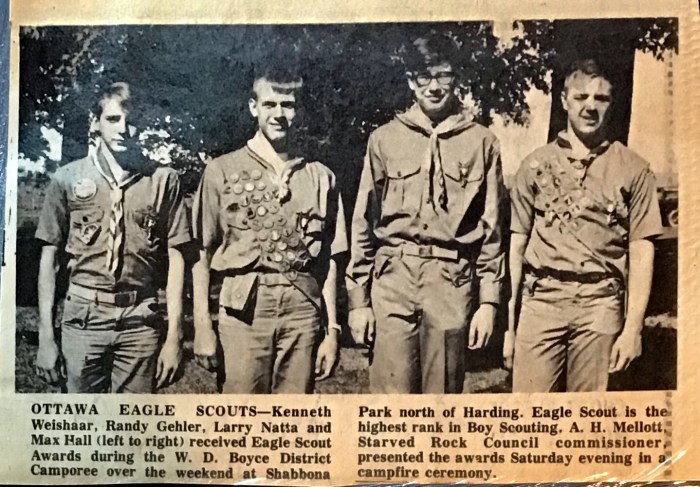
1. In the included photo of the four of us receiving our Eagle Scout awards, I’m the only one still alive. Ken, Randy, and Larry all passed away too soon, at relatively young ages. When I look at the picture, I smile remembering the evening, but I’m also sad as I reflect on each of their deaths. The possibilities, and the promises of life seemed endless in 1969, and yet, here I am the last one alive.

2. Since the 1920s, the Boy Scouts have compiled “ineligible files,” listing adult volunteers considered to pose a risk of child molestation. About 5,000 of these files were made public as a result of court action; another 2,000 or so remain confidential. The Scouts say when a BSA volunteer is added to the database for suspected abuse, “they are reported to law enforcement, removed entirely from any Scouting program and prohibited from re-joining anywhere.”

Boy Scout Oath

On my honor, I will do my best

To do my duty to God and my country and to obey the Scout Law;

To help other people at all times;

To keep myself physically strong, mentally awake and morally straight.

Leaving Ottawa

About a year before mom died, she and I were sitting in her front room and talking about this and that. Suddenly she said to me “when you left for West Point, I didn’t realize then that you would never return to Ottawa.” The words hit home, and made me a bit sad. Later, I thought back to that departure…

I’d received my appointment to West Point in March of my senior year at OHS. After the initial giddiness of getting accepted passed, the reality of what I signed up for started to sink in. While most of my friends would be partying all summer before going to college in the fall, I would be reporting to West Point at the start of July for Beast Barracks. “Beast” was the Academy’s intense two month introduction to West Point, the Army and the Fourth Class System (Freshmen at West Point are known as Fourth Classmen or Plebes).

After graduation from OHS, my days and nights were spent in a combination of dates with Cathy, partying with Tim and Howard, and the occasional family get together. The time passed quickly. Three weeks till I reported; two weeks; one week; three nights, two nights, and then just one night left. Cathy and I were going on our final date that night.

My senior and Cathy’s junior OHS yearbook pictures

I’m not sure how we came up with the idea, but that last date was a dinner at her house. Her parents and sisters were going out for the evening, leaving the house to us. Cathy would fix dinner and we were going to just hang out. Interestingly, her parents called mine to see if it was OK for Cathy to serve a bottle of wine at the dinner. My folks agreed. I was 18 and she was 17. The drinking age for beer and wine in Illinois at the time was 19. I try to imagine this happening today, and maybe it would, but I think a lot of parents would be vilified for allowing the wine to be served.

The night of the dinner came and I rode my bike to her house. She greeted me at the door and then opened the wine. It was an Italian straw basket Chianti and we had a glass. For dinner, she made spaghetti with homemade meat sauce and a salad. I’m sure there was a dessert as well, but neither of us can remember what it was. It was a bittersweet night, as farewells often are. In some ways, it was almost like we were play acting as adults. I suppose our excuse was that we were young, and in love in that high school way. We promised to write, and said we’d see each other soon. The date finally ended, we said our goodbyes and had our farewell kiss.

The next day, mom, dad and I were leaving mid morning for the drive to New York. Howard stopped by for a final farewell. We joked about resuming the party times when I came back at Christmas. When Howard was about to leave, Cathy surprised me and rode up on her bike. We went off to the side and talked a bit more. As we hugged goodbye, she pressed a letter in my hand, and made me promise not to read it until after I left.

And then it was time. Mom, dad and I got in the car and left Ottawa. I think I waited about an hour before opening the letter from Cathy. I probably read it about 50 times on the drive to West Point.

I started Beast two days later and my West Point and Army journey began.

I made it home for Christmas break that year and saw family, friends and Cathy. Mom was right though. I’d left Ottawa for good, although I didn’t know it yet. For the next 45 plus years, Cathy and I would make it back for vacations, or different family milestones. To this day, we still return to Ottawa on trips, but never did return to live there. We both love Ottawa and it was a great place to grow up, but you can’t go back.

In the book Shadows in Paradise, the author Erich Maria Remarque (All Quiet on the Western Front) said it much more eloquently than I ever could:

“But I also knew that there was no going back. One can never go back; nothing and no one is ever the same. All that remains is an occasional evening of sadness. The sadness that we all feel because everything passes and man is the only animal who knows it.”

Addendum:

⁃ I carried the letter from Cathy with me when I checked in to the Academy, and it was in my desk for the entire time at West Point. Today, all these years later, I still have it in a drawer next to our bed. I won’t tell you the contents, but the letter is special to me and I still read it occasionally.

⁃ In the, “it doesn’t really matter, but something else I still remember category”, besides reading Cathy’s letter on the drive to West Point, I also read the book, The Boys of Summer. The book, by Roger Kahn, was written in 1972 and tells the history of the Brooklyn Dodgers up to their victory in the 1955 World Series. I got in trouble from mom for reading the whole way out, instead of looking at the beautiful scenery we were going through when we hit the Appalachian Mountains. I should point out that I still have my copy of that book as well. ;-).