Joy, The Squirrel Whisperer

Our neighbor Joy is a Squirrel Whisperer…. Seriously, she really is.

Well, technically, she is a licensed wildlife rehabilitator who specializes in squirrels and has done so for the past four years. She’s developed a reputation around the area as someone who knows her job, and so far this year she has saved 24 of the 25 squirrels that have come to her.

The squirrels come from arborists, housewives, referrals, vets, and local rehabilitators, among others. Typically, the squirrels come to her when they are only a week or two old, their eyes are still closed and they have no fur. Some have arrived when they were as young as a couple of days old. When their eyes are still closed, they obviously can’t fend at all for themselves, and must be fed every two hours. It turns out there’s a special Squirrel Baby Formula you can buy that is exactly what they need.

As the squirrels get older, their eyes open, and they start to transition from only formula to real squirrel food – Cheerios, fruit, nuts and vegetables and eventually they will be weaned off the formula. When they are around 12-14 weeks old, Joy starts to transition them to an outside “Pre-release” cage that’s on their porch. They get formula twice a day along with solid food in the cage and start to acclimate to outside.


After 2-3 weeks in that cage, Joy opens the door to the cage during the daytime. The squirrels eat breakfast, and eventually wander out the door of the cage. There’s a ramp from the cage to a nearby tree and they start to play in the tree. In early evening, they return to the cage for dinner, and as she feeds them, she locks the cage door for the night. Occasionally, a wild squirrel returns with “Joy’s squirrels”, but races out of the cage when it sees Joy.

And then after about ten more days, comes graduation. She feeds them one morning, opens the door, and doesn’t close it in the evening. The squirrels eventually quit coming back to the cage as they adjust to life in the wild. There are some she knows by sight, and can see them running in nearby trees.

Squirrels typically live two to three years in the wild, although they can live four or five years. It’s rare that they die of old age as they have so many predators. I’ve asked Joy why she does this, when squirrels have such a tough life to begin with. Her answer?   

Mom’s Scalloped Oysters

Mom’s Scalloped Oysters

1972” mom answered.

It was 2007 or ’08 and we were back in Ottawa for Thanksgiving.   My sister Tanya and her husband Shawn had prepared a wonderful meal at their home. Roberta brought a side dish, we brought wine, and Mom brought her “famous” Scalloped Oysters that she always served at Thanksgiving and Christmas.  The entire family was there, and with kids, grandkids, husbands, wives, and friends, it was a madhouse in the best possible way. After the meal we were all talking at the same time, as is often the case in my family. I started thinking and then said, “You know, I think this is the first time I’ve been home for Thanksgiving since…” and was then thinking about when I actually was last home for Thanksgiving.

From the other end of the table, mom answered “1972.”

Was it really that long? Of course she was right. 1972 was my senior year at Ottawa High School. After that, I headed to West Point, and then the Army. Our assignments were around the world and around the country, usually a long way from Illinois. When we were in Germany (almost all of the ‘80s), we didn’t make it back to the States much at all. Later, we were stationed in the DC area. If we could get home at that time of the year, we always planned on making it back for Christmas. After I got out of the Army, we stayed in the DC area and the same held true.

I felt embarrassed and a bit chagrined.

I’ve thought about that Thanksgiving off and on since then. You never quite know where your life is going to take you, but those are the choices you make.

I have also thought about how we took a little bit of home with us, as we travelled the world. Cathy had gathered many of her mom’s Thanksgiving and Christmas recipes when she first left home in the early ‘70s. In addition to turkey, dressing, and green bean casserole, she would make that ol’ favorite, green Jell-O salad.  She also made my mom’s scalloped oysters. I like to think that we honored both of our families with the Thanksgiving meals we made. I sure know we thought of home while making them.

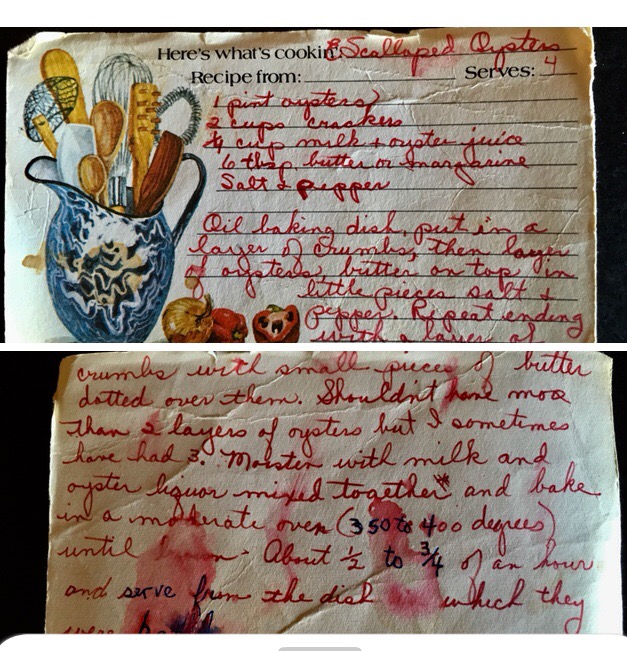
The 3×5 card from Mom with her Scalloped Oysters recipe

Mom’s Scalloped Oysters. Why she first started making it, I haven’t a clue. We lived in the middle of the mid-west and oysters weren’t exactly plentiful, or common. But every year, she would find fresh oysters in Ottawa or a neighboring town, and make “Oyster Dressing”, along with the regular stuffing. It was wonderful. And expensive. Mom would joke that she spent as much on the oysters, as she did on the turkey. Of course we never thought about that as kids.

Over the years, the scalloped oysters became a staple of Cathy’s and my Thanksgiving table as well, if we could find the oysters. Some folks liked it, some tried a small bite, and some wouldn’t eat it. I loved it. Secretly, I always hoped it wouldn’t get eaten, so I’d be able to have more leftovers in the coming days.

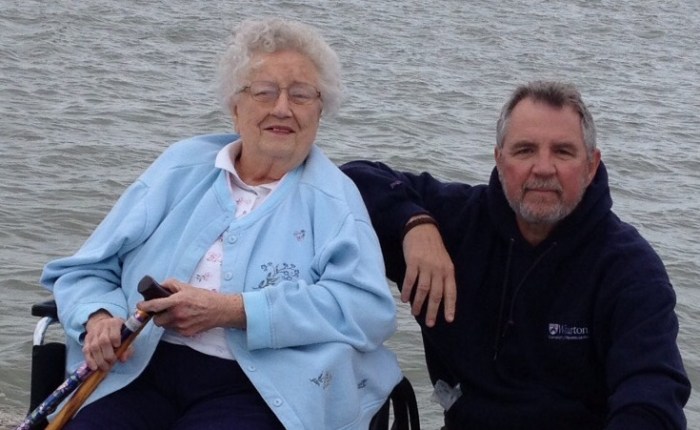
Life continued over the years.  Mom passed away last spring at the age of 86.  I miss her and have found myself thinking about her much more than I expected.  I’m sure that is why the Thanksgiving of 2007 popped in my brain.  Tomorrow is Thanksgiving, and as usual, Cath and I aren’t going back to Ottawa. We’re staying here in Virginia and going to a friend’s home. We are supposed to bring a dish to pass, so we are taking Mom’s Scalloped Oysters. I believe mom will be with us in spirit and giving me a few words of advice while I make the oysters. I know I will be thinking about her throughout the day.

Oh. And I hope our friends aren’t too thrilled with the oyster dressing, and we have enough for leftovers on Friday.

Love you mom….

******* ******* *******

By the way, the recipe doubles our quadruples nicely.  If you are quadrupling it, you may need to take out a small loan.

Crescendo

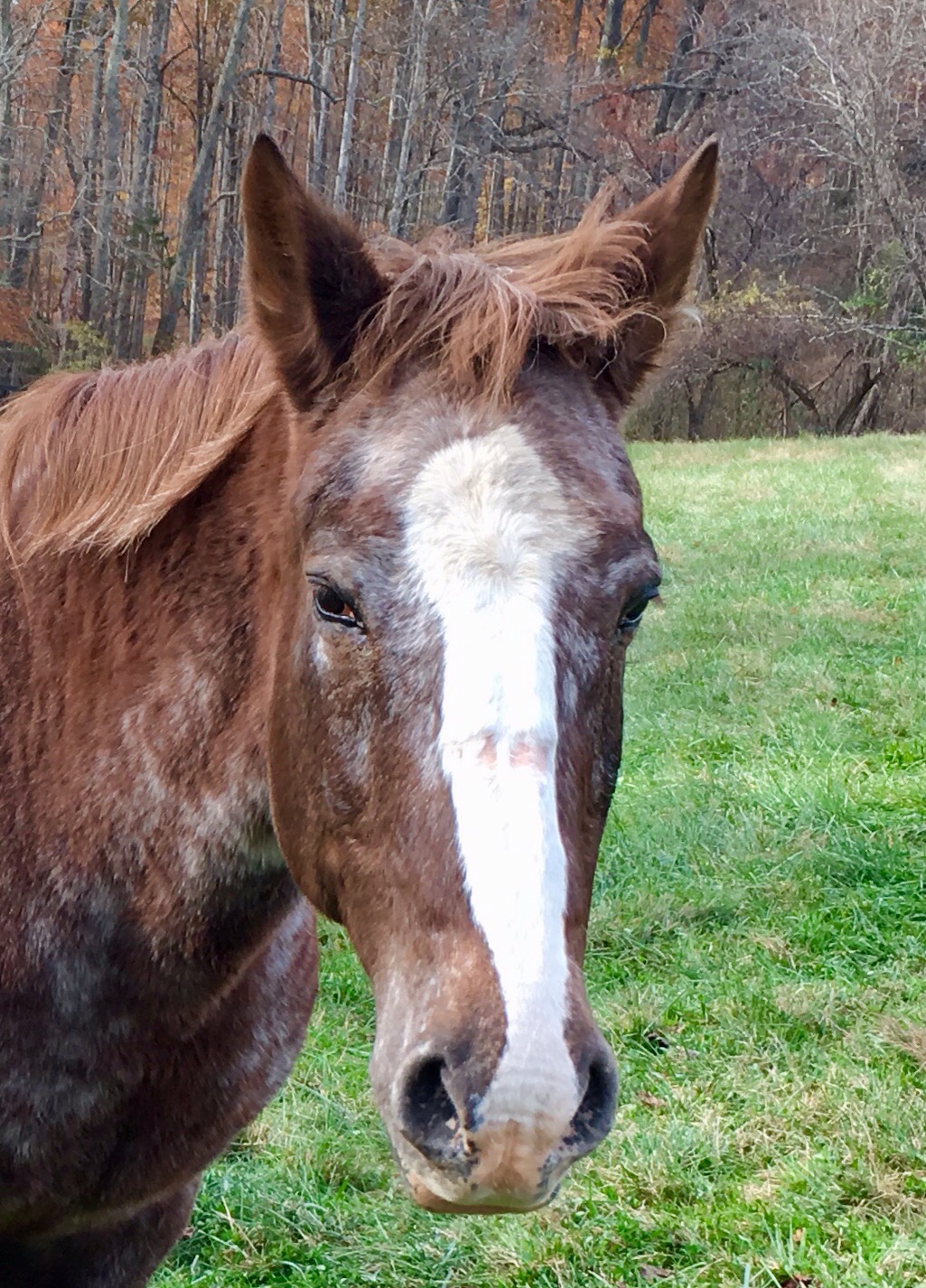
Crescendo returned from the vet today, after having her left eye removed on Thursday.

It wasn’t an easy decision, and of course these things never are. We think we made the right choice, although we may not know for weeks or months.

‘Schendo has been with us for almost 13 years, and is now 26 years old. She’s a sturdy little Appaloosa that Cathy originally purchased in 2005 for dressage. She developed navicular (a bone problem) not long after we bought her, and her riding days were through. Normally, we would have sold her, or given her to someone at that point, but we decided to keep her.

I’m not sure why we decided to keep her at the time. She was pretty, and she was an easy keeper. But she was also the most recessive horse we ever owned. As many of you know, horses are pack animals, and they always have a hierarchy within the herd. In our horse “herds”, whether two animals, or seven, Crescendo was always at the bottom of the pack. The last in line. The last to eat. The one that was always chased away from the hay by the other horses. If this were a Christmas story, she was Rudolf, before the foggy Christmas Eve.  

We are a small farm, so all of our animals have to have a role to justify their staying here. As time passed, we didn’t really see a role for Crescendo and thought it might be time to move her on. And then like Rudolf on that foggy Christmas Eve, we discovered her role.

Cathy bought two brood areas and started breeding horses. Now, one of the things you need to do with new foals is wean (separate) them from their dam at about six months of age. It can seem a bit brutal for the foal, but it’s necessary. As to the mares, one of ours didn’t like it, but the other couldn’t wait for her foals to be gone.

And this is when we discovered Crescendo’s job on the farm. She became the babysitter horse for our foals. When we weaned a foal, we put it in a separate pasture, and put Crescendo with it. The foal would be quite agitated for a day or so, but then would start to follow Crescendo around. Crescendo wouldn’t act like mom, but did something much better. She taught the foals horse manners and how to interact with other horses. She was quite the stern taskmaster, and in fact, I think she enjoyed being the lead horse for a change. After six or eight months, we would return them to the main herd, and Crescendo would revert to her old place in the pack. We had six foals, and she performed the babysitter role admirably for all of them.

In the past year, her left eye developed cataracts and also a reoccurring eye infection. Eventually, she lost most of the eyesight in that eye, but even worse, the infections continued and were giving her a great deal of pain. We had the inevitable conversation with the vet – Do nothing (not a fair option to the horse); remove the eye; or put her down.  

26 isn’t ancient in horse years, but it’s getting pretty old. We went back and forth between removing the eye, or easing her on to the next world. The right decision? The right business decision would be to put her down. The right decision for her? I’m not sure. The vet assured us the pain would be gone from the eye and she would adjust pretty quickly to having only one eye. How much does sentiment weigh in on a decision like this? How do you know what’s truly right for the horse?

Eventually, we decided to remove the eye, and see how things turn out.

‘Schendo’s been a good horse, and has done her job well here at Rohan Farm. I hope she has a few more seasons of cantering out to the back field with the other horses, even if she is third in line.

Packing Heat in Jesus’ House

My neighbor dropped his voice and said “I’ve got a Concealed Carry permit, and I’m now carrying at church.”

We were in a public place, and talking about various things, including the town of Marshall, the Nats, and of course the recent Virginia election. From there, the talk drifted to the recent mass shooting at the church in Texas. That’s when B_______ lowered his voice and let me know he was packing heat at church.  

It turns out that B________ is a regular usher for his church, and has concerns not only for his own safety, but also for that of his fellow worshippers. He feels the need to protect them. I asked if his priest knew, and he lowered his voice further and said no.

He said that he was at church the previous day getting ready for the upcoming Sunday service. He was alone at the time, and carrying his Glock. With no one else around, he drew his pistol and took aim at a statue on the far side of the church. He proudly told me that he activated the laser sight on the pistol, and was able to hold his aim steady on the head of the statue, with no shaking of his hands.

I didn’t really challenge him about carrying in church, because I knew the conversation would go no where, and both of us would feel frustrated. We parted a short time later.

I’ve thought about the conversation off and on since then, and one of the questions I’ve asked myself is, what would Jesus say?   I think the Bible has already given us the answer to that question in Mathew 26: 50-52 which describes his arrest in the Garden of Gethsemane. As Judas gave him a kiss, 

Jesus said “My friends, go ahead and do what you have come for”. Then the others grabbed Jesus and arrested him. One of the men with Jesus (Peter) pulled out a sword and slashed off an ear of the high priest’s servant. “Put away your sword,” Jesus told him. “Those who use the sword will be killed by the sword…”

I’ve discussed this with an old friend of mine who is a minister. A part of the discussion focused on incident response and issues of liability for the church. For me, the greater interest was in a series of questions he asked me –       “What does the church teach its members, and the observant culture beyond the four walls of the church, when we are armed to the teeth in the house of God?      That this physical life is more sacred and should be protected at all costs on this side of eternity?       That we fight fire with fire, literally?      That we have greater faith in our sidearms that in faith itself?      Does the Christian life teach that we’ll be protected from all forms of harm and adversity?”  

In discussions with another minister friend (who also spoke of incident response), she referred to I John 4:18 – 

There is no fear in love; but perfect love [perfect love of God] casts out fear, because fear involves torment.  He that fears is not made perfect in love. 

Then she asked me –     “Isn’t it fear that motivates us to conceal carry in a church?!       Are we succumbing to fear?      Where is our faith…  in life and death and life beyond death?”

While I certainly have some thoughts,  I’m not smart enough to have the answers to any of the questions from my minister friends. I think I have a pretty good understanding of the First and Second Ammendments, but it’s not as clear to me about  God’s will. As an imperfect Christian, I’m always a bit amazed that others, including my neighbor, seem to arrive at the answers more quickly than I do and have a better idea of what God wants us to do. 

Packing in church. Maybe that’s what we’ve come to here in America, but I’m not quite sure Jesus would agree.

My Dad was my Hero

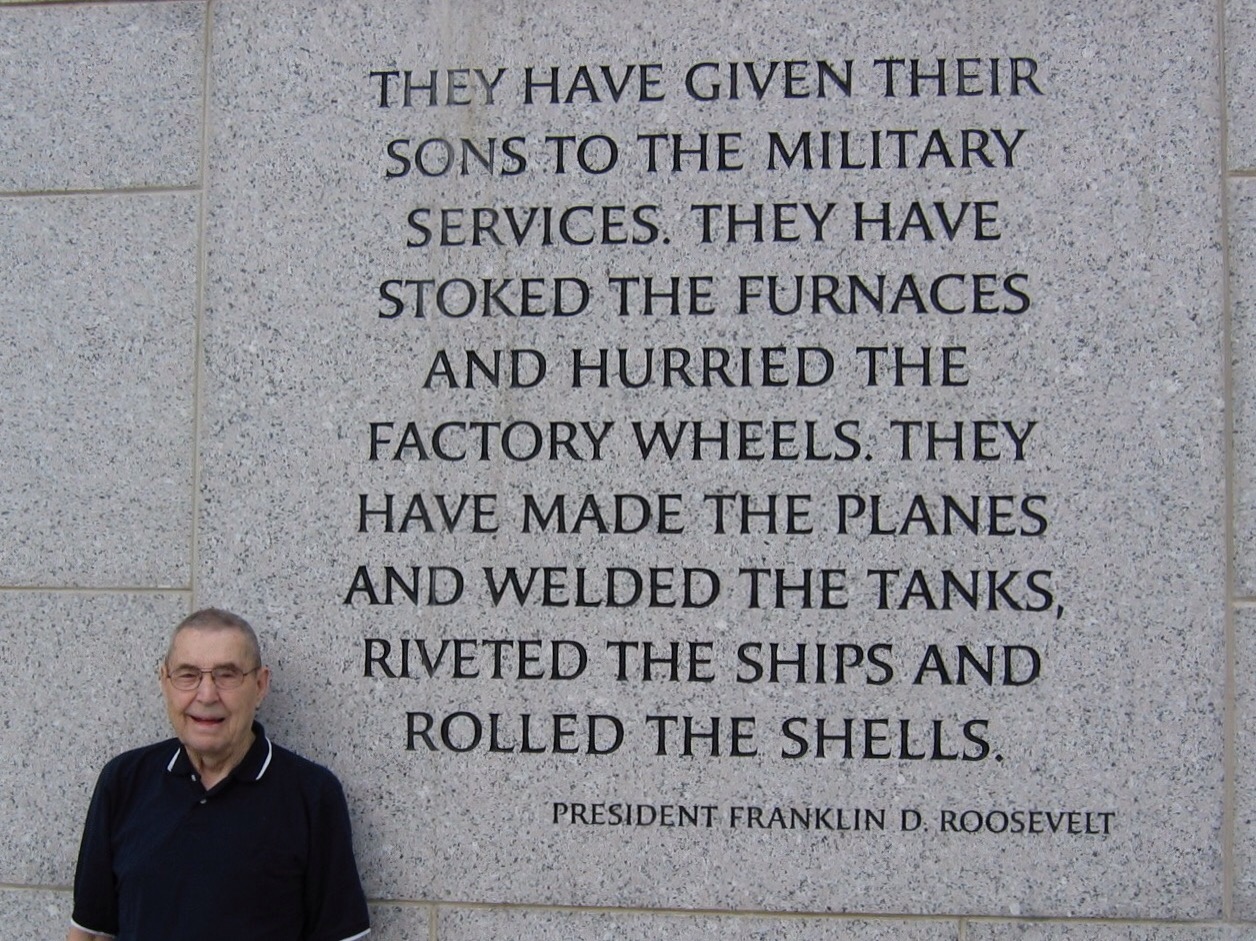
My dad was my hero. He passed away in June of 2010, at the age of 86.
 
Seventy-seven years ago, he joined the Army, in August of 1940. He was 16 at the time. My aunt Ellen vouched for his age and said he was seventeen, but that wouldn’t happen for another two months. (At 16, I was a lifeguard at the local pool, and playing backup on the high school football team). Before joining the army, he had just finished spending 6 months in the Civilian Conservation Corps (CCCs) in Big Piney, Wyoming, one of President Roosevelt’s programs to end the depression. 
 
In November of 1942, he took part in the invasion of North Africa, after Normandy, the second largest invasion ever. He was 19 at the time, and had already spent a bit over 2 years in the army – enough time to be promoted to sergeant. After taking part in the invasion with the 9th Infantry Division, he fought his way across Tunisia. There were several engagements with the Germans, but he also had time to get in trouble. In fact, he was busted to private, for sneaking into the off limits walled city of Oran (twice) in one night. After being arrested by the MPs, he was turned over to his company, and reported in to the commander. “Sergeant Hall reporting as ordered”….”that will be all, Private Hall”…..
 
In the summer of 1943, still age 19, he took part in the invasion of Sicily. While fighting in the mountains in the center of the island, he was shot three times and almost died. They carried him out of the mountains by hand, and it took over a day to get him to an aid station. After being operated on, he still had difficulties. Turns out he also had malaria. They finally treated the malaria, and he started to recover.
 
The war was over for him, but he remained in the army for another two years. He served as an MP, back in North Africa (talk about irony!), and then was shipped to North Carolina, where he finished out the war. In August of 1945, after Hiroshima, he was mustered out. He was 22 at the time, and had spent 5 years in the army. (33 years later, I was 22, and would soon graduate from West Point).
 
I’ve often thought about how the war must have shaped his life, and because of that, how it shaped mine. We throw around words like “the greatest generation”, but most of us never think about what that really meant to their lives then, or later. They served, they sacrificed, and they went on with their lives. I remember the stories he told as I grew up, but they were almost always the funny stories about the war. It was only after his stroke that I heard some of the other stories.
 
From the time I went to West Point through the rest of my life, I asked him his advice. He was never judgmental, and always helped out. He was a good listener, and always treated me like an adult and a friend.
 
My dad was my hero. He passed away in June of 2010, at the age of 86. I miss him every day.